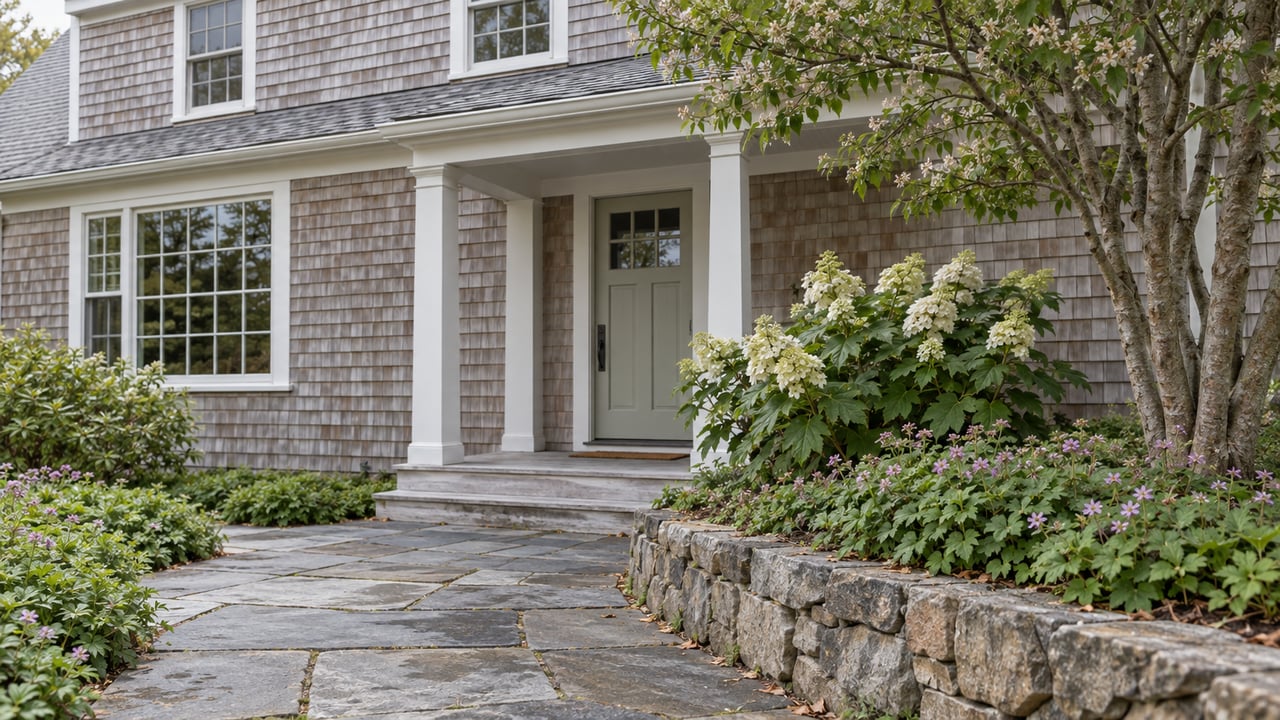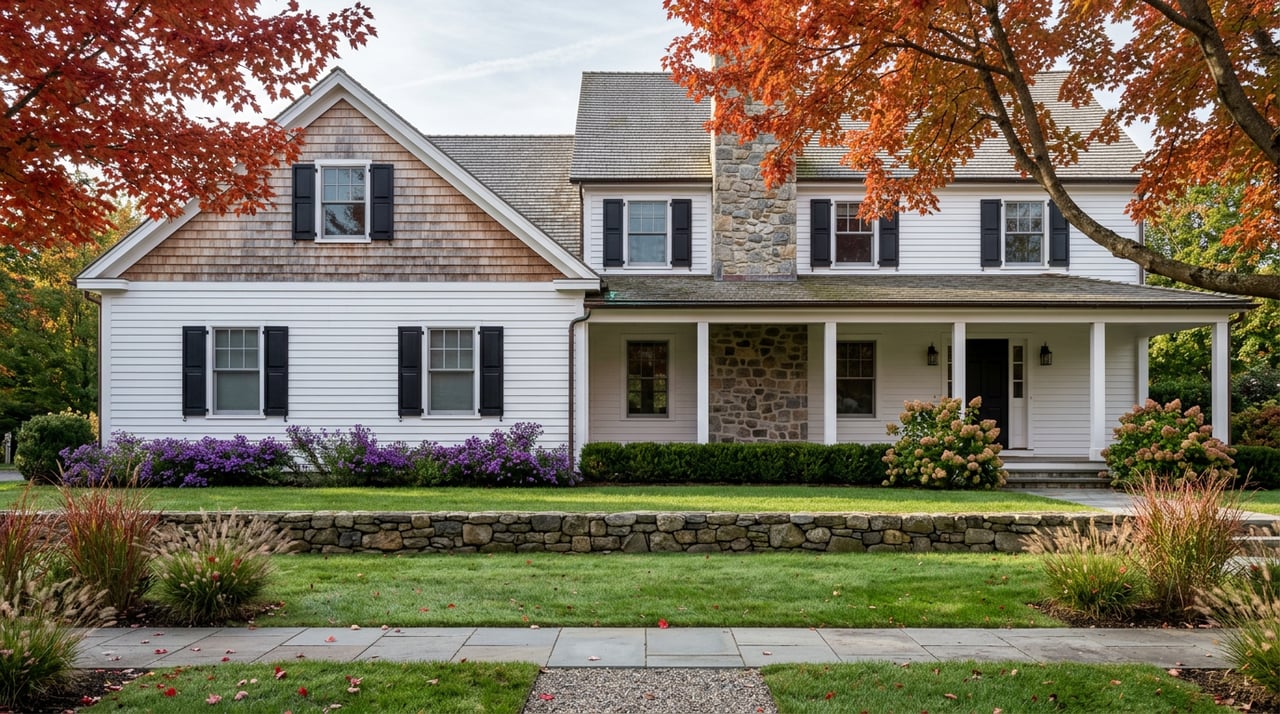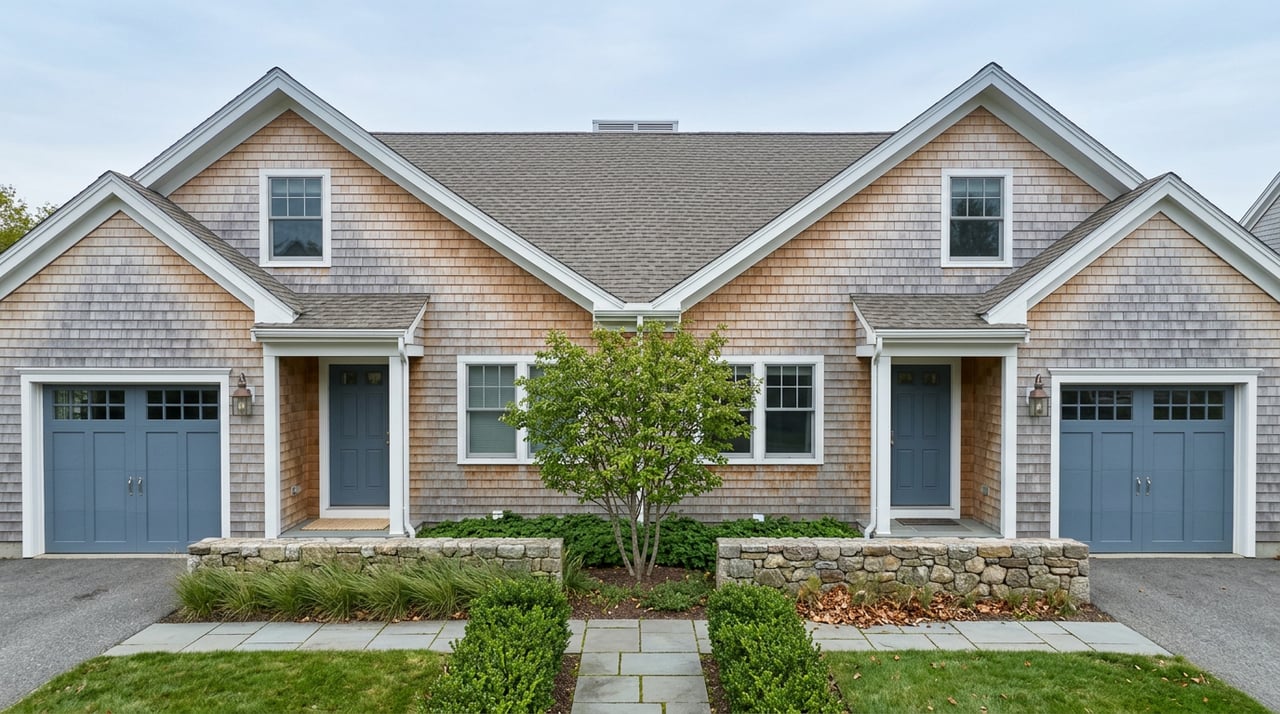
Look at two listings in Newbury this fall and the math stops making sense fast. A three-bedroom townhome under construction on Central Street lists for $799,000. A few miles away, a weathered 1780s farmhouse on 1.2 acres, fully renovated, asks a similar number. Same town, same season, wildly different buildings, and the new one is not automatically the pricier one.
That is not a coincidence. It is the result of a state law written for train stations, applied to a town with no train station of its own, that ended up building 44 townhomes next to Interstate 95 instead.
The Law Nobody In Newbury Asked For
In 2021, Massachusetts passed Section 3A of the state zoning act, better known as the MBTA Communities Act. The law requires any city or town classified as an "MBTA community" to zone at least one district where multi-family housing is allowed by right, sized to a minimum density and, where feasible, located within a half mile of transit. The intent, stated plainly by the state, is to chip away at a housing shortage that has pushed prices and rents higher across Massachusetts for years. You can read the statute itself directly on the state legislature's site.
Newbury does not have a commuter rail stop. It qualifies anyway, because the law also captures towns that border a community that does, and Newbury sits next to Newburyport, which has one. The state grouped Newbury into a category called an Adjacent Small Town, which came with a specific number attached: the town had to zone for a minimum potential capacity of 154 housing units somewhere within its borders.
That is not a suggestion. Towns that skip compliance lose eligibility for state funding sources including the MassWorks infrastructure program, the kind of money that pays for water, sewer, and road projects. The mechanics of the requirement, and what happens if a town opts out, are laid out on the state's MBTA Communities page.
Two Options On The Table, One Site That Got Built
Newbury's Planning Board did not just pick a spot and move on. Working with the Merrimack Valley Planning Commission, the town floated four possible zoning districts, two clustered near the Newburyport commuter rail station in the northern part of town, and two in the Byfield village area near I-95.
At the town's Annual Town Meeting on April 30, 2024, roughly 300 residents showed up to vote.
The article passed with 234 votes in favor and 80 against, well above the majority required, adopting the overlay across all four proposed districts.
The Attorney General signed off on the bylaw and district maps that August. You can see the town's own account of that process, including the fact sheet and presentation slides used at Town Meeting, on Newbury's MBTA Communities page.
Zoning permission and construction are two different things, though. The overlay district covers both the rail-adjacent parcels and the Byfield sites, but the first project to actually get built under it, Byfield Heights, went up in Byfield, next to the highway, not near the train. A developer, Massachusetts Housing Opportunities Corp., chose that land. The law set the requirement. The market picked the location. That gap between what a law permits and what actually gets financed and built is worth remembering any time a zoning change makes headlines, because the headline is rarely where the shovels end up.
What Actually Landed On Central Street
Byfield Heights sits on 10 acres at 34 Central Street. It is a 44-unit collection of townhomes with one, two, and three-bedroom layouts, built under the town's MCMOD overlay bylaw. The project has been moving through Newbury's Planning Board for site plan review and modification requests through the middle of 2026.
A few specifics worth knowing if you are cross-shopping:
- Units run from 1,841 to 2,130 square feet
- Listed pricing has ranged from roughly $799,000 to $1.1 million depending on the model and finish
- Parking averages 2.4 spaces per unit, typically attached with a garage door opener
- The site includes walking trails, a recreation area, and a playground
- At least one active listing notes the unit is new construction, ready for spring or summer 2027, with taxes listed as to be determined until the town assesses the finished home
That last detail matters more than it sounds like it should. Buying pre-construction means you are pricing a home the town has not taxed yet. Your carrying-cost math has a real gap in it until that assessment lands, in a way it never does with an existing farmhouse whose tax history is already public record.
The Premium That Mostly Isn't
Here is where the numbers get interesting. Newbury's resale market, measured over the three months ending in April 2026, put the townwide median sale price at $930,000, down 11.5 percent from the same window a year earlier, with a median price per square foot of $456, down 8.1 percent year over year.
Run that same per-square-foot math on Byfield Heights and you get a wide band. The largest unit at the lower end of the listed price range works out to roughly $375 per square foot. The smallest unit at the top of the range works out to roughly $597 per square foot. The resale median of $456 falls inside that band, but closer to the cheap end than the expensive one.
That means the cheapest way into new construction in Newbury right now prices below what the town's existing housing stock is fetching per square foot, and only the largest, most upgraded new units price meaningfully above it. New construction here is not a flat premium sitting on top of the resale market. It is a range that overlaps the resale market almost completely, and in some cases undercuts it.
For a buyer weighing a farmhouse against a townhome, that changes the question. It is not "how much extra am I paying for new." It is "which specific unit, at which specific size, am I actually comparing to which specific resale listing." The averages hide more than they reveal, which is exactly the trap a headline median always sets.
What This Means If You're Deciding Between New And Old
If you want land, character, and the kind of house that comes with a story attached, Newbury's older stock, particularly around Byfield Village and the Old Town area, is still where you will find it, and the resale median gives you a real anchor for what that costs per square foot.
If you want low-maintenance living, a garage, and a builder's warranty, Byfield Heights and the wave of MBTA-driven multi-family housing it represents is genuinely new inventory in a town that has not seen a project this size in a long time. Just go in knowing the tax bill is not final yet, the HOA structure and fees deserve the same scrutiny you would give any condo association, and the listing agent's relationship to the builder is worth understanding before you write an offer.
Either way, the fact that this project exists at all, in the specific place it exists, tells you something true about how these state mandates actually play out. The law aimed at transit access. The building landed at the highway exit. That is not a failure of the law. It is just what happens when a state requirement meets a town's actual buildable land, and it is the kind of local mechanic that never shows up in a portal listing.
Is Newbury required to keep approving projects like this?
The town met its minimum obligation under Section 3A when the Attorney General approved its bylaw in August 2024. Whether additional projects get proposed and built within the overlay district depends on individual developers and available parcels, not a fixed schedule set by the town.
Will a project like this ever go up near the Newburyport train station instead?
The overlay district technically allows for multi-family housing on the rail-adjacent parcels that were part of the original four-site proposal. Nothing has broken ground there as of this fall, but the zoning permission has not gone anywhere.
Does new multi-family housing in Newbury affect property taxes for everyone else?
A 2024 report from the Metropolitan Area Planning Council looked specifically at whether new multi-family housing drives up school enrollment and municipal costs, a common concern in these debates. That is a separate conversation from any single project's tax bill, and it is worth reading directly rather than taking on faith from a blog post.
What should I ask before buying a pre-construction unit here?
Get the projected tax assessment in writing if the builder can provide one, confirm what the HOA covers and what it does not, and ask directly whether your listing agent has any financial relationship to the builder. None of that is unusual for new construction, but all of it is easier to sort out before you are under contract than after.
Newbury is changing in small, specific ways this year, and most of them will not show up until you are standing in front of the right listing at the right moment. If you are trying to figure out whether a farmhouse, a new townhome, or something else entirely fits what you are actually looking for, Lynne Hendricks knows this market closely enough to walk through the real tradeoffs with you. Let's Connect.